FILE DEPT

Field Report Archive

Private Skeptical Evidence Corpus

← Back to Case Files

Unexplained Death Historical Newspaper Investigation
Evidence Dossier

Legacy category: Unsolved Murder

The Unsolved Death of Mary Rogers

Evidence Dossier: A record proves that a statement, transfer, examination, or result was documented. It does not automatically prove the anomalous interpretation attached to it.
1841-07-25, 1841-07-28
Hoboken, New Jersey, United States, New York City, New York, United States
8/10
3/10
Mary Rogers was murdered in late July 1841, with her body found in the Hudson River showing marks of physical violence, though later deathbed testimonies argued she died from a botched abortion.
Moderate. While contemporary news reports document the discovery of the body and the coroner's inquest findings of strangulation, the lack of forensic preservation and the uncorroborated nature of Mrs. Loss's deathbed confession leave the exact cause of death unresolved.

Investigative Assessments

"The reported claim remains worth testing against the record: Mary Rogers was murdered in late July 1841, with her body found in the Hudson River showing marks of physical violence, though later deathbed testimonies argued she died from a botched abortion. The strongest documented reasons to keep the file open are: New-York Tribune, August 12, 1841, Page 2: Murder of Mary C. Rogers: Reports the discovery of Mary Rogers' body in the Hudson River near Hoboken, the initial identification by Alfred Crommelin, and the marks of violence on her throat and body indicating strangulation; New-York Tribune, August 17, 1841, Page 2: The Hoboken Murder: Provides details of the evolving investigation, public outrage, and the coroner's inquest findings of violence. Key unresolved lead: Did Daniel Payne's suicide note contain a hidden confession, or was it merely the act of a grief-stricken partner?"
"Evidentiary limitations: Moderate. While contemporary news reports document the discovery of the body and the coroner's inquest findings of strangulation, the lack of forensic preservation and the uncorroborated nature of Mrs. Loss's deathbed confession leave the exact cause of death unresolved. Note that: New-York Tribune, August 12, 1841, Page 2: Murder of Mary C. Rogers fails to support: Does not provide conclusive forensic identification of the perpetrator or confirm the gang violence hypothesis; New-York Tribune, August 17, 1841, Page 2: The Hoboken Murder fails to support: Does not confirm the identities of any suspects or provide definitive physical evidence linking suspects to the crime. Documented contradiction: The coroner's inquest reported marks of extreme physical violence and manual strangulation, whereas the deathbed confession of Mrs. Loss claimed Rogers died from a medical complication during an abortion. Leading conventional hypothesis: The gang violence theory holds that Mary Rogers was abducted and assaulted by a gang of ruffians roaming the Hoboken shoreline."

Case Summary

In July 1841, Mary Cecilia Rogers, a prominent young clerk at a New York City tobacco shop, vanished. Her body was found floating in the Hudson River near Hoboken, New Jersey, showing signs of violence. The case became a national media sensation and inspired Edgar Allan Poe's fictional mystery, yet it remains officially unsolved with competing theories of gang violence, suicide, or a botched illegal abortion.

Evidence Locker

5 inspectable evidence items. Claims and source findings are kept separate.

historical newspaper investigation Local copy hash-verified Complete source

New-York Tribune, August 12, 1841, Page 2: Murder of Mary C. Rogers
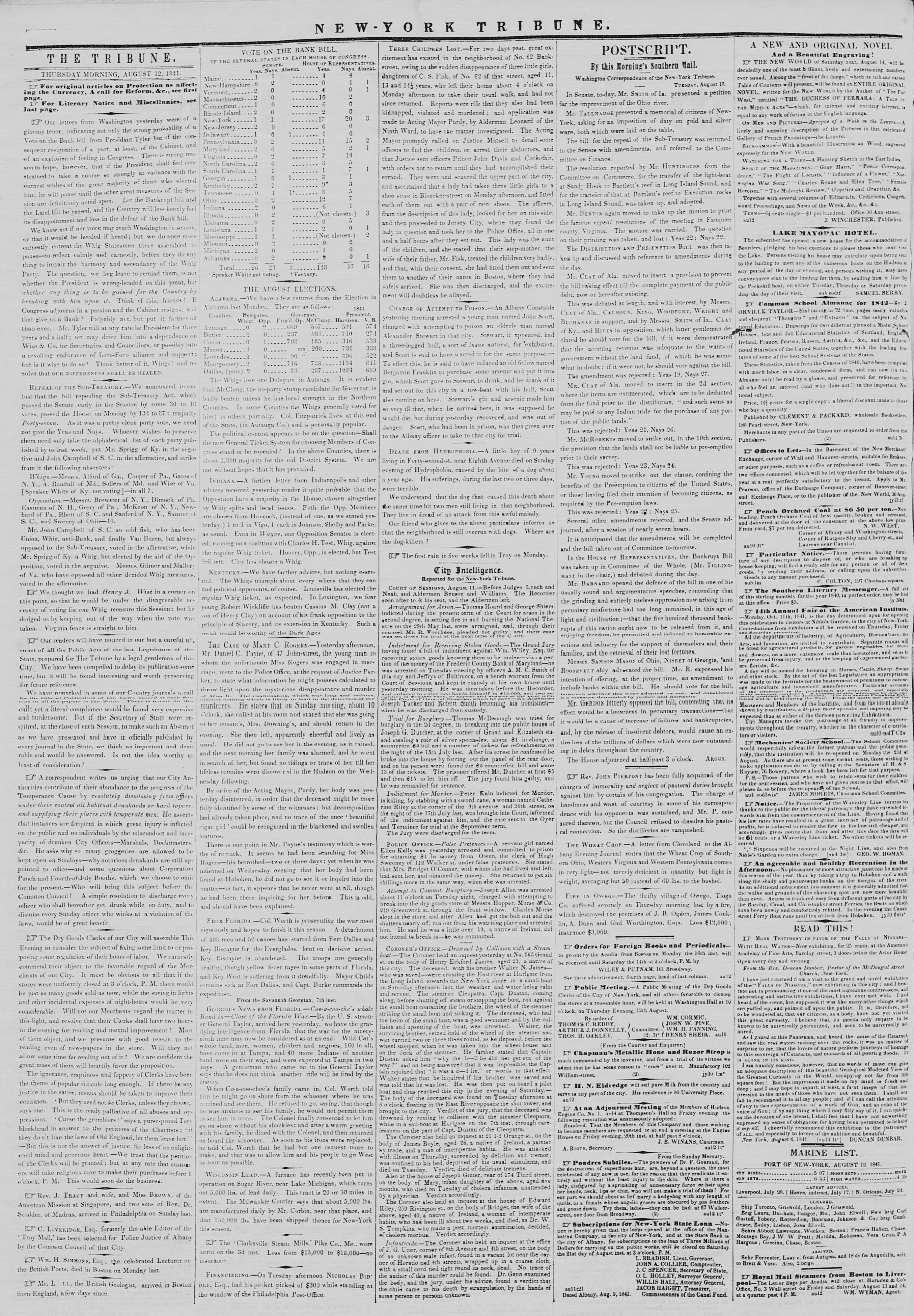
New-York Tribune, August 12, 1841, Page 2: Murder of Mary C. Rogers

Analyst rating: central primary news record

“On Wednesday the body of a young female was found floating in the river near Hoboken, which was identified as that of Mary Rogers.”
Record locationPage 2, Column 3
Evidence classprimary news report
Relationship to claimDocuments the discovery of the body and the initial murder investigation.
Authenticity assessmentVerified Library of Congress digital scan.
What this supportsReports the discovery of Mary Rogers' body in the Hudson River near Hoboken, the initial identification by Alfred Crommelin, and the marks of violence on her throat and body indicating strangulation.
What it does not supportDoes not provide conclusive forensic identification of the perpetrator or confirm the gang violence hypothesis.
ProvenanceDigitized by the Library of Congress under the Chronicling America program.
Chain of custodyDownloaded directly from the Library of Congress IIIF image service to local storage.
Source completenessComplete. The full newspaper page containing the article is preserved in high resolution.
Known gaps: No known completeness gaps recorded.
historical newspaper investigation Local copy hash-verified Complete source

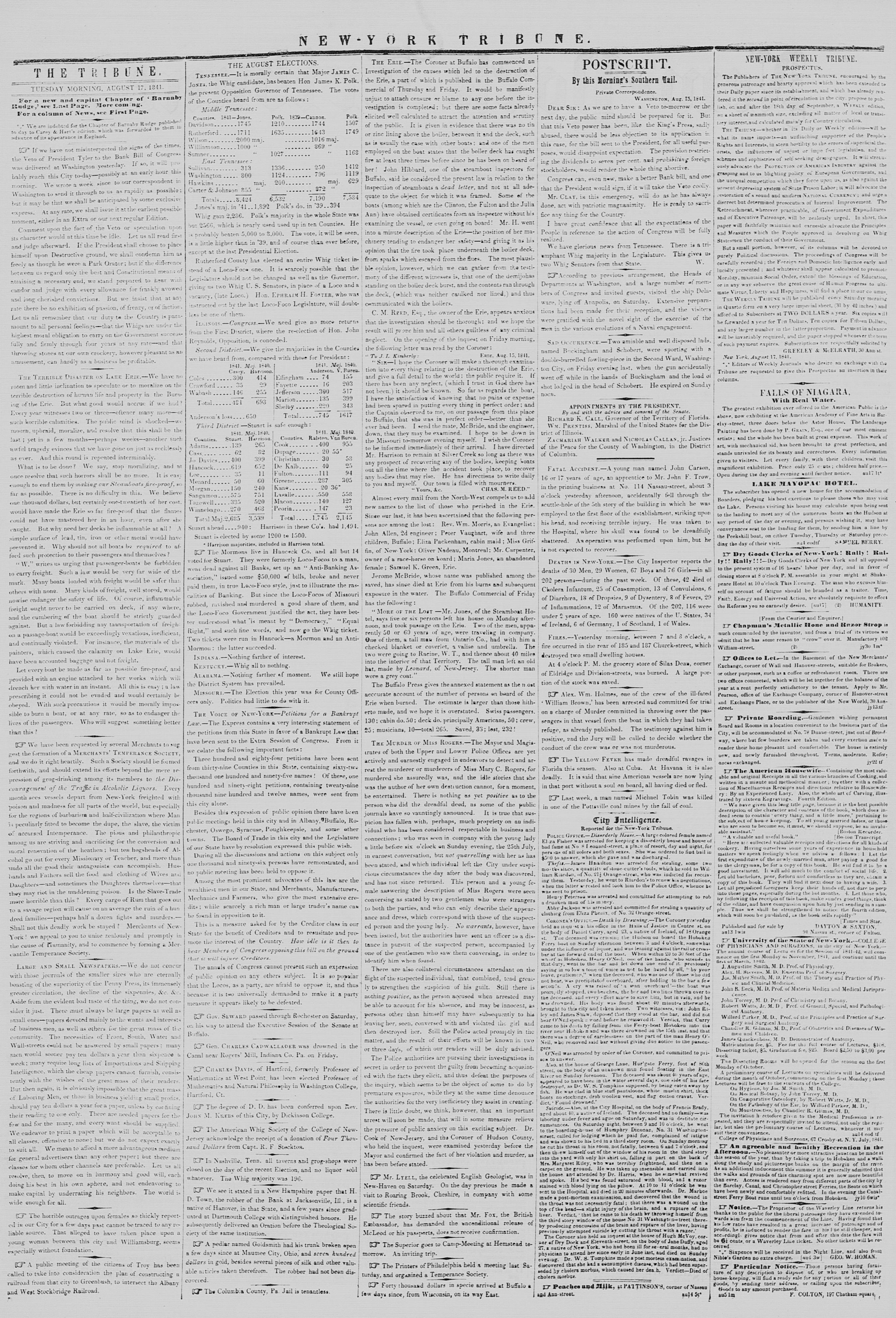
New-York Tribune, August 17, 1841, Page 2: The Hoboken Murder

New-York Tribune, August 17, 1841, Page 2: The Hoboken Murder

Analyst rating: follow-up investigative record

“The murder of Miss Rogers continues to excite the deepest interest in our community.”
Record locationPage 2, Column 2
Evidence classprimary news report
Relationship to claimDocuments the ongoing investigation and public reaction.
Authenticity assessmentVerified Library of Congress digital scan.
What this supportsProvides details of the evolving investigation, public outrage, and the coroner's inquest findings of violence.
What it does not supportDoes not confirm the identities of any suspects or provide definitive physical evidence linking suspects to the crime.
ProvenanceDigitized by the Library of Congress under the Chronicling America program.
Chain of custodyDownloaded directly from the Library of Congress IIIF image service to local storage.
Source completenessComplete. The full newspaper page containing the follow-up article is preserved.
Known gaps: No known completeness gaps recorded.
historical newspaper investigation Local copy hash-verified Complete source

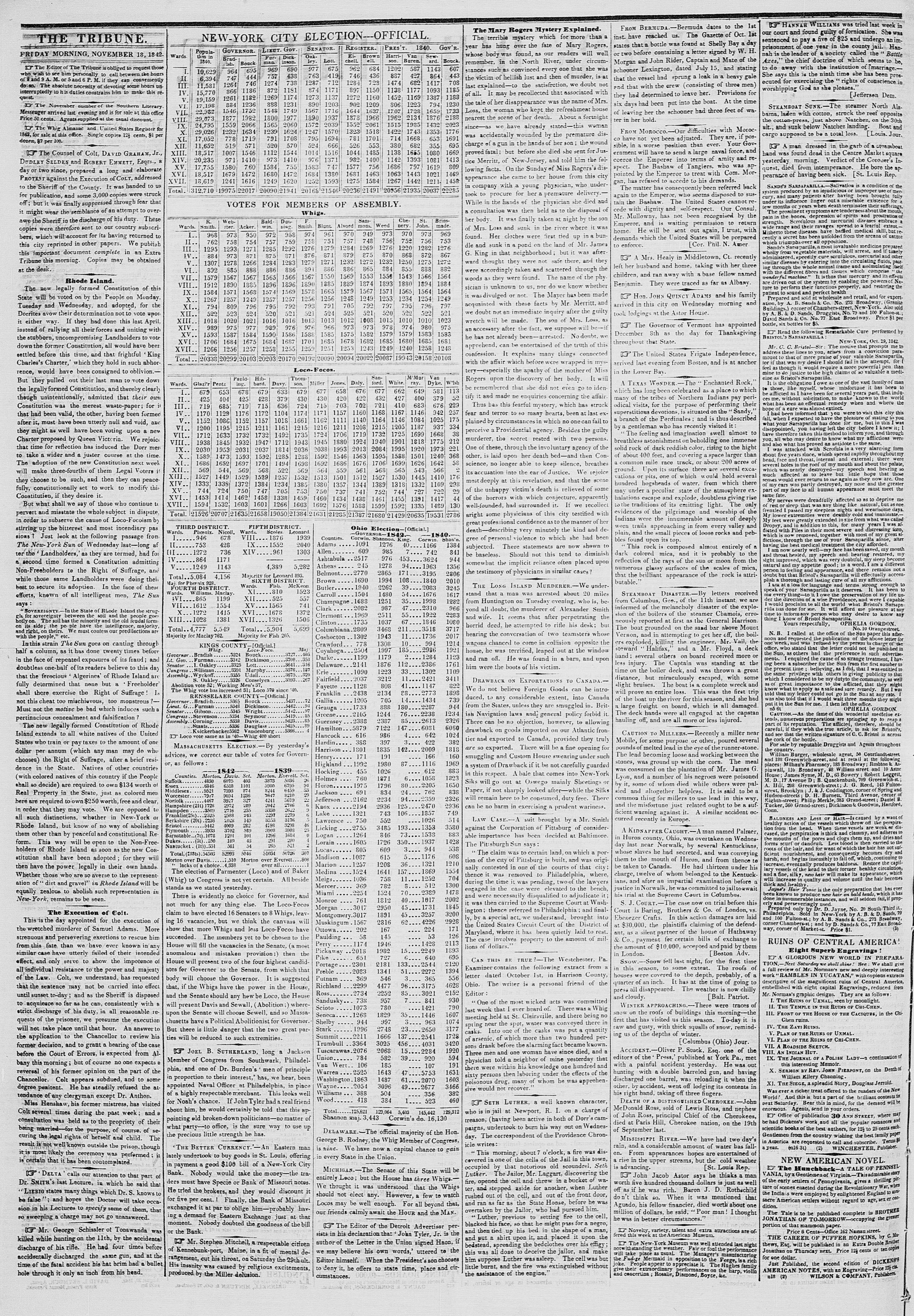
New-York Daily Tribune, November 18, 1842, Page 2: The Mary Rogers Mystery Explained

New-York Daily Tribune, November 18, 1842, Page 2: The Mary Rogers Mystery Explained

Analyst rating: deathbed confession report

“The mystery is at length explained. It is now known that she died in the house of Mrs. Loss at Hoboken, while undergoing an operation for an abortion.”
Record locationPage 2, Column 1
Evidence classprimary news report
Relationship to claimDocuments the introduction of the abortion theory which challenged the gang murder hypothesis.
Authenticity assessmentVerified Library of Congress digital scan.
What this supportsDocuments the deathbed statements of Frederica Loss, who claimed Mary Rogers died from a botched abortion performed at her tavern by a young physician and that the body was dumped in the Hudson River.
What it does not supportDoes not provide names of the doctor or verify the truth of Mrs. Loss's confession.
ProvenanceDigitized by the Library of Congress under the Chronicling America program.
Chain of custodyDownloaded directly from the Library of Congress IIIF image service to local storage.
Source completenessComplete. The complete page covering the 1842 explanation is preserved.
Known gaps: No known completeness gaps recorded.
historical newspaper investigation Local copy hash-verified Complete source

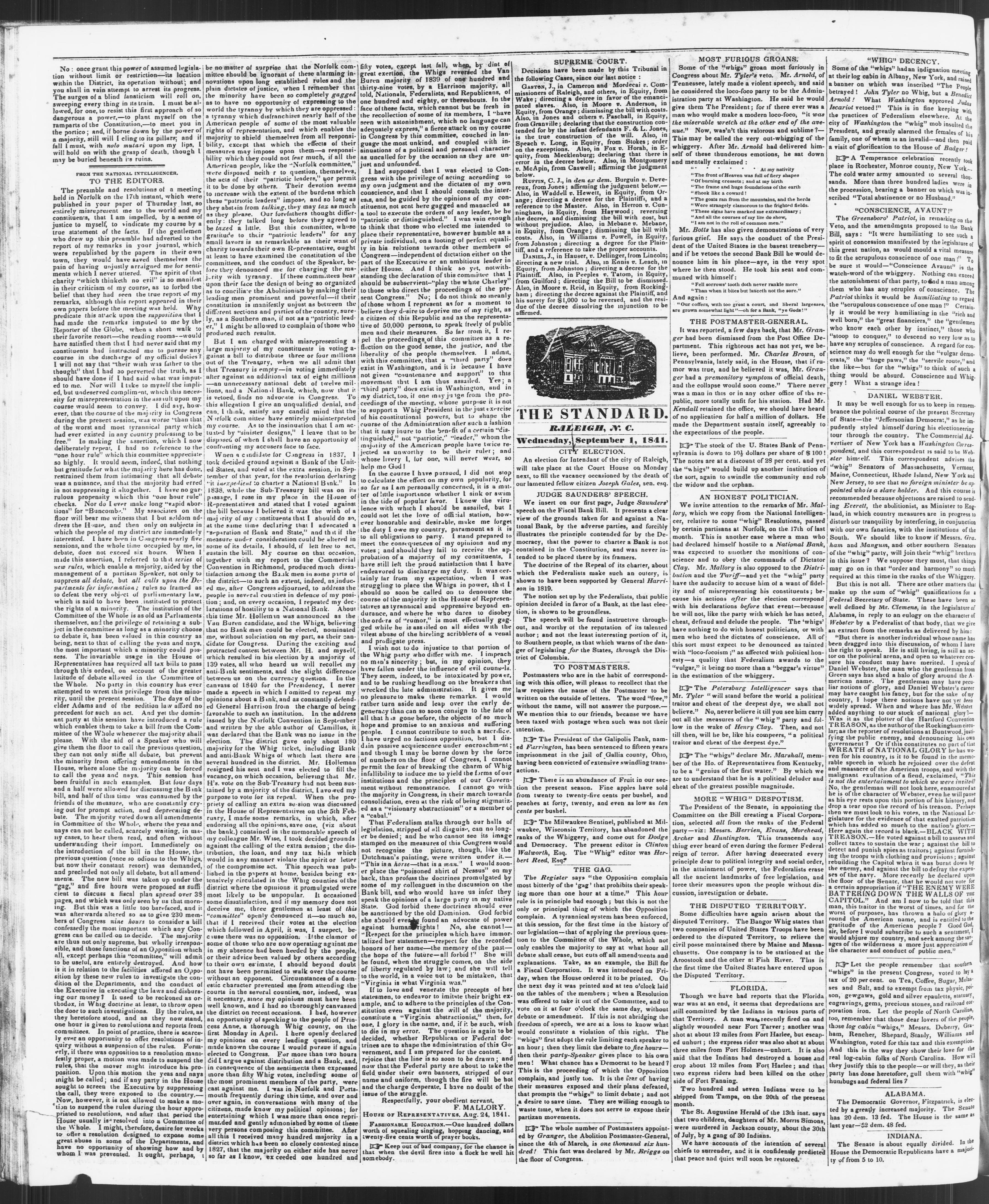
The North-Carolina Standard, September 1, 1841, Page 2: The Murder of Mary Rogers

The North-Carolina Standard, September 1, 1841, Page 2: The Murder of Mary Rogers

Analyst rating: regional syndication record

“The murder of this beautiful and interesting girl has thrown the city into a state of intense excitement.”
Record locationPage 2, Column 4
Evidence classsecondary syndicated report
Relationship to claimShows the national syndication and spreading of the crime theories.
Authenticity assessmentVerified Library of Congress digital scan.
What this supportsDemonstrates the widespread national interest and coverage of the murder case, detailing the Hoboken coroner's inquest findings.
What it does not supportDoes not provide any new or independent evidence beyond repeating New York and New Jersey newspaper reports.
ProvenanceDigitized by the Library of Congress under the Chronicling America program.
Chain of custodyDownloaded directly from the Library of Congress IIIF image service to local storage.
Source completenessComplete. The full syndicated page is preserved.
Known gaps: No known completeness gaps recorded.
literary analysis Local copy hash-verified Complete source

Edgar Allan Poe, 'The Mystery of Marie Rogêt', 1842-1843

Analyst rating: contextual literary ratiocination analysis

“was the only daughter of the widow Estelle”
Record locationThe Works of Edgar Allan Poe, Volume 1
Evidence classanalytical commentary
Relationship to claimFictionalized analysis of the case based on actual 1841-1842 news reports.
Authenticity assessmentVerified Project Gutenberg public domain text.
What this supportsProvides a contemporaneous logical dissection of the newspaper evidence available in 1841 and 1842, criticizing the errors of the police investigation and the bias of the press.
What it does not supportDoes not represent factual testimony or independent primary evidence of the crime, as it is a fictionalized treatment.
ProvenanceTranscribed from the Gutenberg edition of Poe's Tales.
Chain of custodyDownloaded directly from Project Gutenberg to local storage.
Source completenessComplete. The complete text of Poe's works volume containing the story is preserved.
Known gaps: No known completeness gaps recorded.

Documented Timeline

  • 1841-07-25: Mary Rogers leaves her home in Manhattan, stating she is visiting relatives in Williamsburg.
  • 1841-07-28: Her body is found floating in the Hudson River near Hoboken, New Jersey, by a search party.
  • 1841-08-12: The New-York Tribune publishes a report detailing the marks of violence on the body and the coroner's inquest findings.
  • 1841-10-08: Daniel Payne, Rogers' fiancé, commits suicide by taking laudanum near Sybil's Cave in Hoboken.
  • 1842-11-18: The New-York Daily Tribune reports a deathbed confession by Mrs. Frederica Loss stating Rogers died from a botched abortion at her tavern.

Named Participants and Roles

  • Daniel Payne, Fiancé of Mary Rogers. Account basis: Contemporaneous. Witness quality: Moderate. Payne gave statements regarding her departure on July 25, 1841. However, his accounts were heavily scrutinized, and his subsequent suicide in October 1841 left many questions open. Evidence: ny-tribune-1841-08-12, ny-tribune-1841-08-17
  • Frederica Loss, Keeper of a refreshment house near Hoboken. Account basis: Retrospective. Witness quality: Low. Mrs. Loss made a deathbed confession in late 1842 alleging Mary Rogers died from a botched abortion at her premises. However, this statement was retrospective, uncorroborated, and occurred under pressure when she was dying after an accidental shooting. Evidence: ny-daily-tribune-1842-11-18
  • Alfred Crommelin, Former suitor who identified her body. Account basis: Contemporaneous. Witness quality: Moderate. Crommelin identified the body floating in the Hudson River on July 28, 1841. His identification was based on clothing and personal features, but the body was already decomposed. Evidence: ny-tribune-1841-08-12

Contradictions and Record Conflicts

  • The coroner's inquest reported marks of extreme physical violence and manual strangulation, whereas the deathbed confession of Mrs. Loss claimed Rogers died from a medical complication during an abortion.
  • Daniel Payne claimed to have no knowledge of Mary's whereabouts on July 25, but his subsequent suicide note and presence near the body recovery site cast doubt on his statements.

Conventional Explanations

  • The gang violence theory holds that Mary Rogers was abducted and assaulted by a gang of ruffians roaming the Hoboken shoreline.
    Evidence for: Contemporaneous newspaper reports describing a torn dress, a parasol, and handmarks on her neck suggest a violent struggle with multiple attackers.
    Limits: Edgar Allan Poe's analysis and the subsequent deathbed confession of Mrs. Loss suggest that the items in the thicket may have been staged and that a gang could not have carried out the crime in broad daylight without witnesses.
    Evidence: ny-tribune-1841-08-12, nc-standard-1841-09-01, poe-marie-roget
  • The botched abortion theory proposes that Rogers died during an illegal abortion performed at the refreshment house of Frederica Loss, and her body was thrown into the river to conceal the event.
    Evidence for: The deathbed statement of Mrs. Loss published in November 1842 directly claims this occurred, explaining her sudden disappearance and the disposal of the body.
    Limits: The confession was uncorroborated, Mrs. Loss's sons were not prosecuted, and the coroner's initial report stated there were clear marks of manual strangulation and abuse, which would be inconsistent with a simple abortion cover-up.
    Evidence: ny-daily-tribune-1842-11-18, ny-tribune-1841-08-12

Evidence Stance Matrix

HypothesisStanceRationaleEvidence IDs
Mary Rogers was murdered by a gang of ruffians.MixedThe early reports in the New-York Tribune and North-Carolina Standard support the gang theory by reporting marks of violence and torn clothing found in a thicket. However, the later Tribune reports regarding a botched abortion and Poe's analysis challenge this gang hypothesis.ny-tribune-1841-08-12, ny-tribune-1841-08-17, nc-standard-1841-09-01, ny-daily-tribune-1842-11-18, poe-marie-roget
Mary Rogers died of a botched illegal abortion at Mrs. Loss's boarding house.MixedThe November 18, 1842 New-York Daily Tribune article publishes Mrs. Loss's deathbed confession which directly supports this theory. However, the statement was retrospective and uncorroborated, and earlier inquest reports of violence at the Hoboken shoreline challenge this explanation.ny-daily-tribune-1842-11-18, ny-tribune-1841-08-12, poe-marie-roget
Mary Rogers was murdered by a close acquaintance, potentially her fiancé Daniel Payne or an admirer.InconclusiveDaniel Payne had a strong motive and committed suicide near the discovery site shortly after her death. However, no direct evidence connects him to her death, and Poe's analysis argues against Payne's involvement, leaving the theory inconclusive.ny-tribune-1841-08-12, ny-tribune-1841-08-17, poe-marie-roget

Missing Evidence

  • The official coroner's inquest records and testimony transcripts from the Bergen County, New Jersey investigation.
    These primary legal records would verify the exact statements of the medical examiners and witnesses, which are currently only preserved in fragmented newspaper summaries.
  • The primary confession statement or depositions from Mrs. Loss's sons.
    Direct depositions would confirm whether Mrs. Loss's sons admitted to disposing of the body or if the confession was fabricated or exaggerated by the press.

What Remains Unresolved

  • The exact cause and manner of Mary Rogers' death remains undetermined.
    The physical evidence was poorly preserved, and the conflicting claims of murder by strangulation versus a botched abortion were never reconciled in a court of law.
  • The motive and identity of the person or persons who disposed of the body remain unknown.
    No suspects were ever charged or tried for her death, and the principal suspect, Daniel Payne, committed suicide without leaving a clear explanation.

Investigative Hypotheses

  • Mary Rogers was murdered by a gang of ruffians.
  • Mary Rogers died of a botched illegal abortion at Mrs. Loss's boarding house.
  • Mary Rogers was murdered by a close acquaintance, potentially her fiancé Daniel Payne or an admirer.

Open Questions

  • Did Daniel Payne's suicide note contain a hidden confession, or was it merely the act of a grief-stricken partner?
  • Why did the New York and New Jersey police fail to coordinate their investigations during the crucial first weeks?

Archival Landing Pages and Evidence Corpus

New-York Tribune, August 12, 1841

Historical Newspaper Investigation Local Source Verified

External URL: https://chroniclingamerica.loc.gov/lccn/sn83030212/1841-08-12/ed-1/seq-2/

Open Local Artifact (JPG Document) · Download Copy

New-York Tribune, August 17, 1841

Historical Newspaper Investigation Local Source Verified

External URL: https://chroniclingamerica.loc.gov/lccn/sn83030212/1841-08-17/ed-1/seq-2/

Open Local Artifact (JPG Document) · Download Copy

New-York Daily Tribune, November 18, 1842

Historical Newspaper Investigation Local Source Verified

External URL: https://chroniclingamerica.loc.gov/lccn/sn83030213/1842-11-18/ed-1/seq-2/

Open Local Artifact (JPG Document) · Download Copy

The North-Carolina Standard, September 1, 1841

Historical Newspaper Investigation Local Source Verified

External URL: https://chroniclingamerica.loc.gov/lccn/sn85042147/1841-09-01/ed-1/seq-2/

Open Local Artifact (JPG Document) · Download Copy

Edgar Allan Poe, 'The Mystery of Marie Rogêt'

Witness Account Local Source Verified

External URL: https://www.gutenberg.org/ebooks/2147

Open Local Artifact (TXT Document) · Download Copy

Media Context

Editorial context only: These media listings document broadcasts, adaptations, documentaries, or cultural references. They do not constitute evidence, corroboration, or investigative testimony.

Mystery of Marie Roget (1942)

feature film indirect literary adaptation

Adapts Poe's fictional Marie Roget story, which transposed and fictionalized the real Mary Rogers murder.

IMDb ID: tt0035107 · Verified 2026-08-07